
Tyres for cars and SUVs
The right size, the right season, the right moment to change: here is how we think it through at the workshop, and what you can check yourself before coming in.
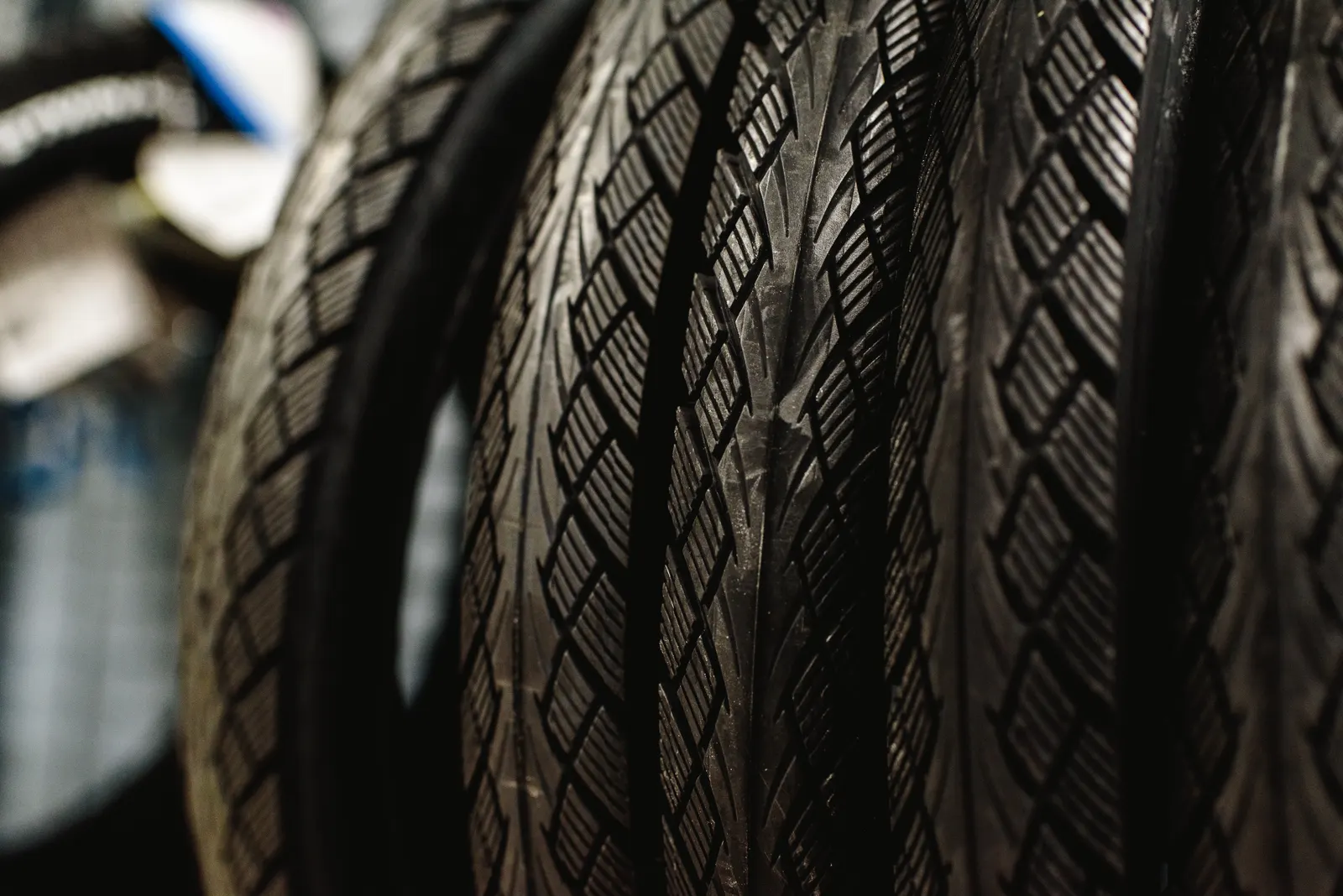
Finding the right size
The prescribed size appears in the vehicle registration document, on the driver's door sticker or inside the fuel flap. It reads like 205/55 R16 91V: width, sidewall height, diameter, load and speed. Our marking decoder translates each value for you.
In Switzerland you may fit an approved alternative size for your vehicle, but never a lower load or speed index than prescribed. For winter tyres, a lower speed rating is tolerated provided a reminder sticker is placed in the driver's field of vision.
Summer, winter or all-season
Summer tyres grip best above 7 degrees. Winter tyres, with their softer compound and sipes, take over as soon as the thermometer drops, even on dry roads. The full story is on our winter tyres page.
All-season tyres are an honest compromise for a car that drives little, mostly in town, and stays parked on snowy days. For daily commutes or trips up to the resorts, two dedicated sets remain the better choice. Insist on the 3PMSF marking (alpine snowflake), the only real proof of winter capability.
When to change
- Legal tread depth: 1.6 mm across the whole tread. In practice we recommend changing at 3 mm in summer and 4 mm in winter: below that, water clearance and snow grip drop sharply.
- Age: 10 years maximum, even with low mileage. From 5 years on, a yearly rubber check is due. The date is in the DOT code, and our decoder works it out for you.
- Uneven wear: shoulders more worn than the centre (underinflation), centre more worn (overinflation), sawtooth or one-sided wear (alignment to be checked).
A local trick: slide a two-franc coin into the main groove. If the base below Helvetia stays fully visible, less than 3 mm of tread is left: come and see us.
SUVs and 4x4s: what changes
An SUV weighs 200 to 400 kg more than a comparable saloon and carries its weight higher. Its tyres often bear an XL (Extra Load) marking or a reinforced load index: respect it, winter set included.
Four driven wheels help you pull away on snow; they do nothing for braking. A 4x4 on summer tyres on a cold road brakes like any other car on summer tyres: badly. All-wheel drive is no substitute for a winter set.
Fitting, balancing and TPMS
Every fitting includes removal, mounting, electronic balancing and a pressure check. On vehicles with TPMS sensors we test, program or replace them: a pressure warning light that stays on after a wheel change is not something you have to live with.
For information or an appointment, call +41 21 616 35 31: the workshop is in central Lausanne, Place du Tunnel.