205 Width
The tyre width in millimetres, measured sidewall to sidewall. Here, 205 mm. A wider tyre grips better on dry roads, but uses more fuel and floats on snow.

Sales, fitting, balancing, repairs and storage of tyres for cars, SUVs, motorcycles and vans. The workshop has been advising private customers, companies and public bodies since 1927.
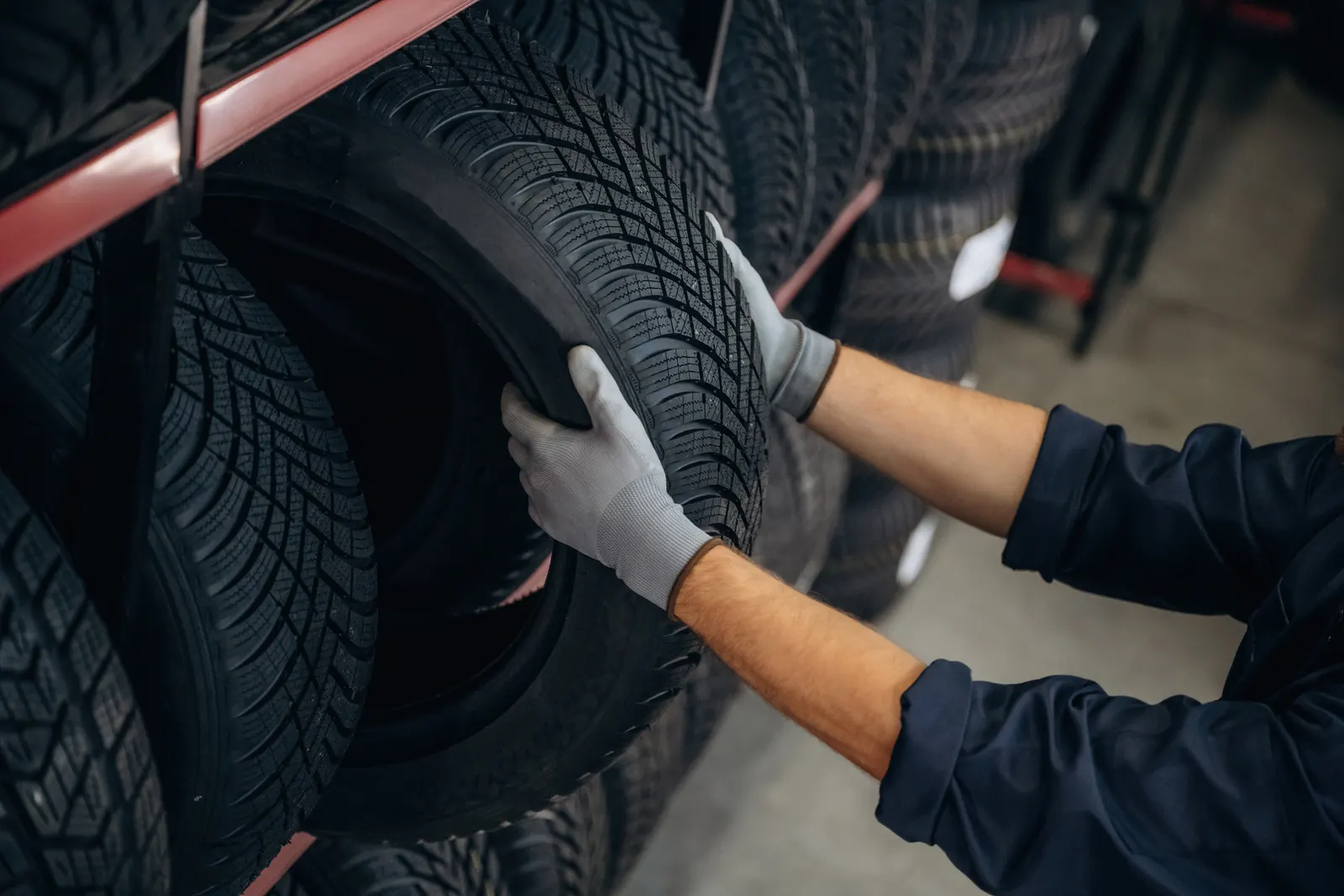

The tool
Everything is written on the sidewall: dimensions, maximum load, top speed, date of manufacture. Tap each part of the marking to decode it, then try your own.
The tyre width in millimetres, measured sidewall to sidewall. Here, 205 mm. A wider tyre grips better on dry roads, but uses more fuel and floats on snow.
The sidewall height as a percentage of the width. Here, 55% of 205 mm, so a sidewall of about 113 mm. A low number means a sporty look, a firmer ride and a rim more exposed to kerbs.
R for radial: the carcass plies run perpendicular to the direction of travel. Virtually every modern tyre is built this way. ZR simply flags a tyre rated for more than 240 km/h.
The tyre's inner diameter, which is the rim diameter, in inches. Here 16 inches, or 40.6 cm. Rim and tyre must match exactly.
The load index: the maximum weight the tyre can carry. 91 = 615 kg per tyre, so 2,460 kg across all four, roughly four Hérens cows. Never fit a lower index than the one prescribed for your vehicle.
The speed rating: the maximum speed the tyre can sustain, here V = 240 km/h. It must cover your vehicle's top speed: a car rated for 220 km/h needs at least a V index, even though the Swiss limit is 120 km/h. The one exception is winter: a lower rating (Q, 160 km/h, at minimum) is allowed, with a sticker showing that speed in the driver's field of vision.
Mud + Snow: a manufacturer's own declaration, with no mandatory testing behind it. Even a summer tyre may carry M+S. For a true winter tyre, look for the 3PMSF snowflake.
Three Peak Mountain Snowflake: a snowflake inside a three-peak mountain. This marking is certified by a standardised snow braking test. It is the one that counts for winter.
The last four digits of the DOT code give the week and year of manufacture: 3621 = week 36 of 2021. From 5 years on, have the rubber checked yearly; at 10 years, replace the tyre even if the tread looks fine.
Copy the main marking from the sidewall, for example 225/45 R17 94W.
Find the DOT code on the sidewall and enter its last four digits.
Services
Summer, winter and all-season tyres for passenger cars, SUVs, motorcycles and vans. We order the exact size prescribed for your vehicle, fit it and balance it, same day whenever stock allows.
A perforation in the tread: a durable repair from the inside whenever the carcass is sound. A straight diagnosis before any replacement.
Your summer or winter set spends the off-season with us, checked and ready to refit when the season changes.
Steel or alloy rims, TPMS pressure sensors supplied, programmed and fitted.
Chains matched to your tyre size, with a fitting demonstration on request.
Off-season and by appointment: chassis, engine, body and interior washing, plus small mechanical jobs.
Tap a brand to see what sets it apart. All of them are available at the workshop, in stock or quickly ordered: we recommend according to your driving and your budget, not our margin.
The French premium brand. Strong points: some of the best longevity on the market and performance that stays stable down to the wear indicator. A safe bet in summer (Primacy, Pilot Sport), winter (Alpin) and all-season (CrossClimate).
The German benchmark of TCS and ADAC tests, regularly first in braking, dry or wet. Original equipment on many European cars. PremiumContact in summer, WinterContact in winter.
The sporting Italian, original equipment for performance marques with the P Zero. Great steering precision; Cinturato for daily driving, Sottozero for winter.
The versatile American, very strong on wet roads. Its Vector 4Seasons is one of the most awarded all-season tyres in Europe.
The Japanese giant, one of the largest tyre makers in the world. Turanza in summer, Blizzak in winter, and genuine run-flat expertise.
A racing and motorcycle heritage. A good performance-for-money compromise, popular with keen drivers and riders.
The Dutch brand with Giugiaro-designed treads, a long-standing favourite of the workshop. Remarkable winter and all-season tyres (Quatrac), high quality at a fair price.
The Korean maker now fitted as original equipment by several European manufacturers. One of the most convincing price-quality ratios on the market.
The Finn that invented the winter tyre in 1934. A specialist in deep cold and snow, ideal if you drive up to the resorts often.
The Japanese choice of keen drivers: the Advan sport range, the Geolandar SUV range, and solid dry-road discipline.
The "rain tyre" of the Continental group: water clearance and aquaplaning resistance at a contained price.
The Czech entry level of the Continental group: certified basic safety at the best price, for low annual mileage.
Sizes, summer or winter, when to change: the complete guide.
Profile, running-in, pressure: what changes on two wheels.
C marking, reinforced load ratings, company fleets.
What Swiss law says, and what rubber does below 7 degrees.
Permitted dates, 80 km/h, motorways: the exact rules.
Pressure, wear, punctures, storage: the habits that make tyres last.
Drop by the workshop or give us a call: honest advice takes five minutes and costs nothing.
Call the workshop
+41 21 616 35 31