
Why winter tyres
No legal obligation in Switzerland, and yet almost everyone fits them. Here is what a winter tyre actually changes, what the law says, and when to make the swap.
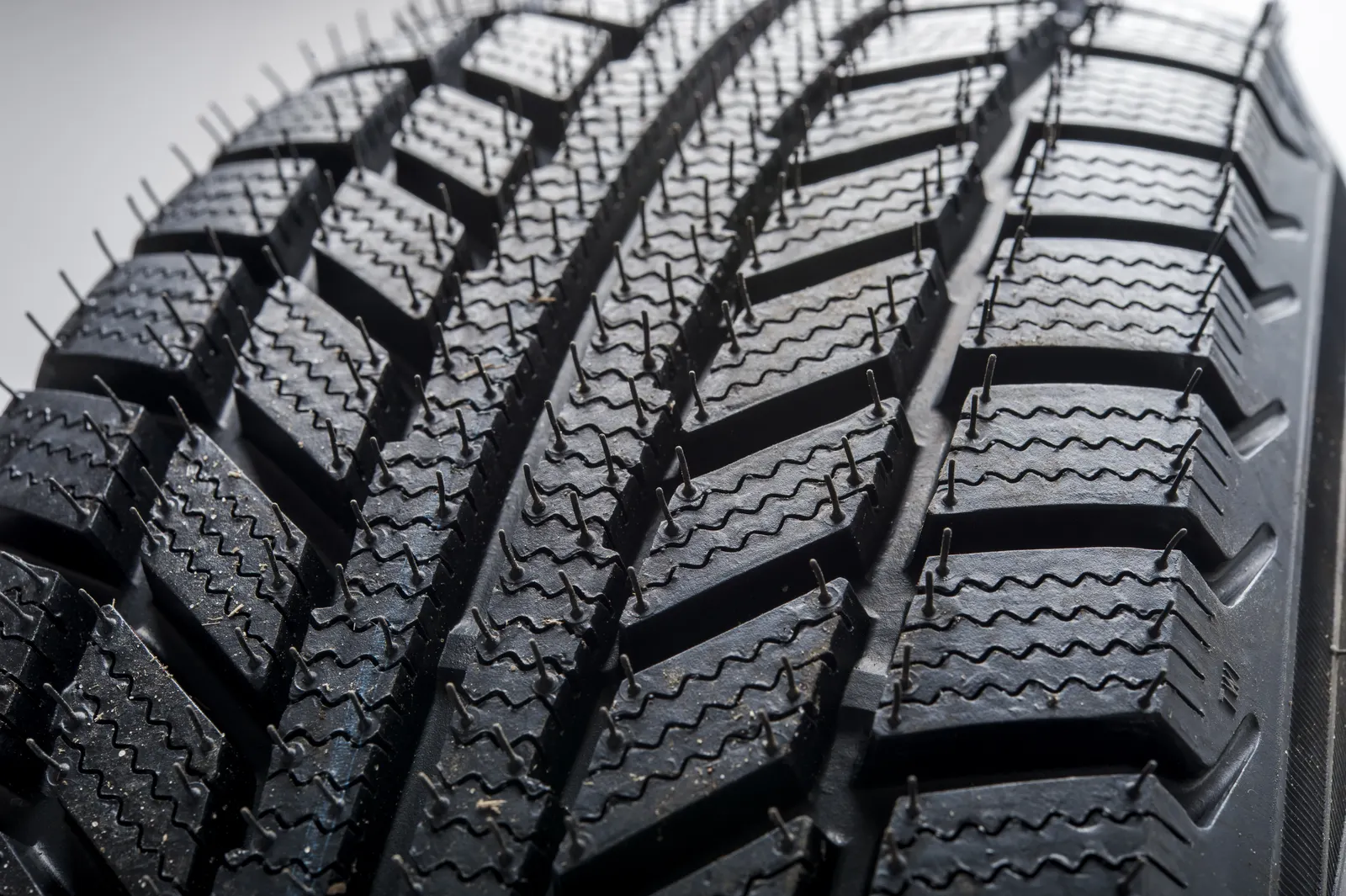
It is all in the rubber, not the snow
A summer tyre hardens as the temperature drops: below about 7 degrees its compound loses grip even on a dry road. A winter tyre uses a silica-rich compound that stays supple in the cold, plus hundreds of sipes that bite into snow and clear the film of water.
That is why the question is not whether it will snow in Lausanne, but whether it will be cold. From November to March the answer is yes, down to the lakeside in Ouchy.
Braking distances that speak for themselves
| Situation at 50 km/h | Summer tyres | Winter tyres |
|---|---|---|
| Snow-covered road | about 60 m | about 35 m |
| Cold, wet road | longer | shorter |
On snow, the stopping distance is nearly halved. At the point where a car on winter tyres has stopped, the same car on summer tyres is still doing about 40 km/h. These orders of magnitude come up consistently in tests by motoring clubs such as the TCS.
What Swiss law says
- No direct legal obligation to fit winter tyres.
- But the law requires a vehicle suited to the conditions: blocking traffic on summer tyres in snow can mean a fine.
- After an accident on unsuitable tyres, the insurer may reduce its payout for contributory negligence, and criminal liability can follow.
- Legal minimum tread 1.6 mm, but below 4 mm a winter tyre has lost most of its bite on snow.
From October to Easter
The old rule remains the best one: fit in October, remove after Easter. The real trigger is not snow but the thermometer: once overnight lows settle below 7 degrees, it is time. In Lausanne practice, aim for the end of the autumn holidays to avoid the first-snow rush: the day it falls, every workshop in town is fully booked.
Across the border: obligations and dates
Crossing the border in winter? Unlike Switzerland, the neighbouring countries make winter equipment mandatory, each in its own way, and those rules apply to Swiss-registered cars too. The essentials for a passenger car:
| Country | Rule | Period |
|---|---|---|
| Germany | 3PMSF tyres are mandatory whenever the road is wintry (snow, ice, slush). The M+S marking alone is no longer accepted. | Condition-based, all year round |
| France | Mountain law: 3PMSF winter tyres on all four wheels, or chains/socks on board, in the signposted communes of 34 mountain departments, including the nearby Jura and Alps. | 1 November - 31 March |
| Austria | Winter tyres (alpine marking, 4 mm minimum tread) or chains whenever the road is snowy or icy. | 1 November - 15 April |
| Italy | Winter tyres or chains on board on signposted roads; Aosta Valley from 15 October. | Generally 15 November - 15 April |
M+S is not enough, look for the snowflake
The M+S marking is a manufacturer's own claim. Only the 3PMSF symbol, a snowflake inside a three-peak mountain, certifies a standardised snow braking test. Every genuine recent winter tyre carries it; check your sidewall with our decoder.
As for all-season tyres, good recent models carry the snowflake too and serve city drivers well. For regular commuting or mountain trips, two dedicated sets remain better across the board: see our car tyre guide.