
Studded tyres: rules and sensible use
On sheer ice, nothing beats a stud. But in Switzerland studded tyres follow precise rules, and they are the right answer for only a minority of drivers. The full picture.
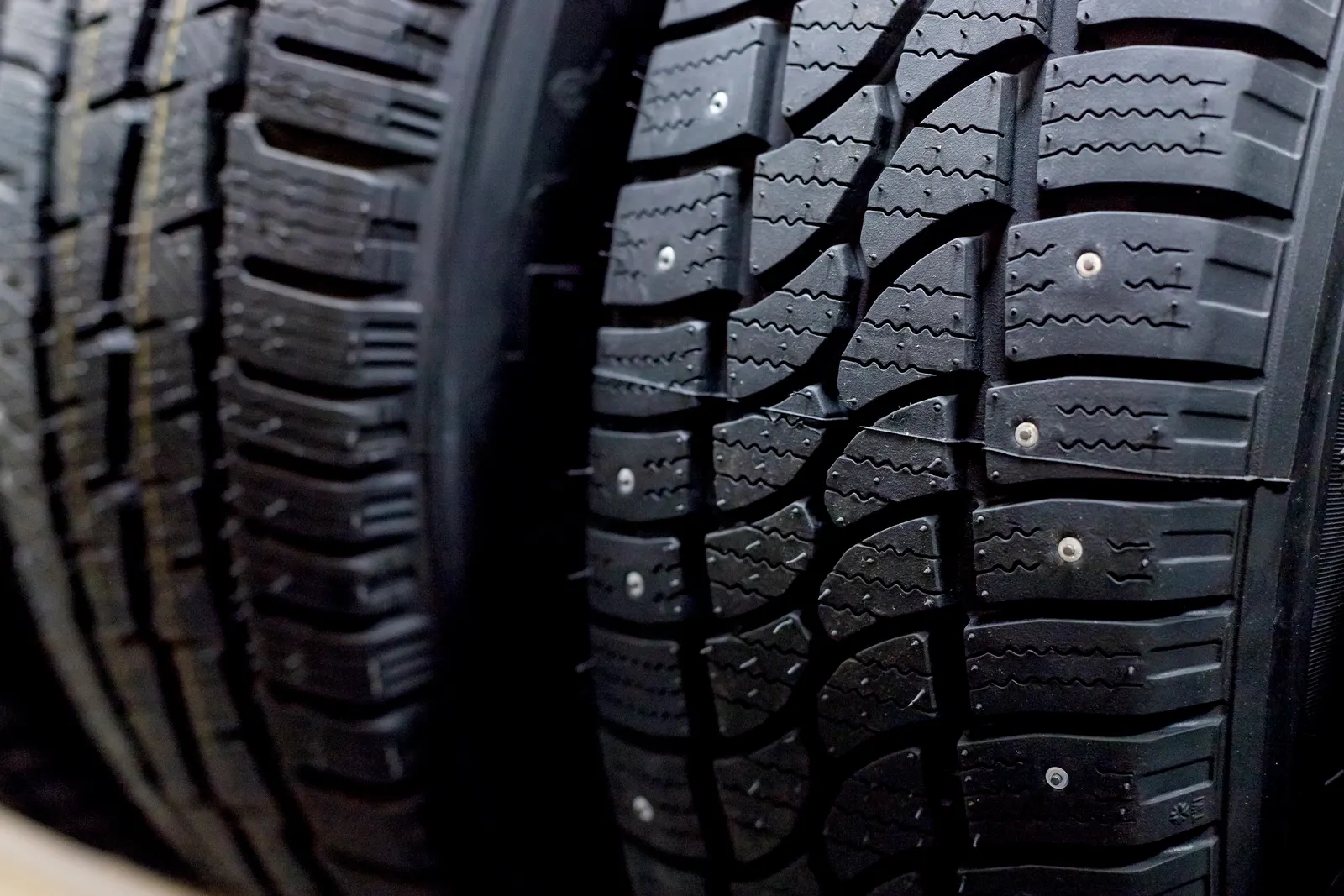
What Swiss law allows
- Permitted only from 1 November to 30 April, unless cantons extend the period in wintry conditions.
- Maximum speed 80 km/h, with the mandatory "80" sticker on the rear of the vehicle.
- Banned on motorways and expressways, except the Gotthard (A2) and San Bernardino (A13) tunnels.
- Fitted on all wheels, not just the driven axle.
- Allowed on vehicles up to 7.5 t; special rules apply above.
In practice, you cannot take the A1 or the A9 out of Lausanne on studs: journeys have to be planned on cantonal roads. That constraint alone rules studs out for most everyday use.
Who studs make sense for
A chalet at the end of a shaded mountain road, winter rounds on icy lanes, a village in the Jura or the Prealps where the snowplough passes after you leave: those are the genuine use cases. On bare ice, a stud bites where the best rubber spins.
For everyone else, a good recent 3PMSF winter tyre does better on packed snow and dry roads, with no speed limit and no motorway ban. Our winter tyres page explains why.
The alternative: snow chains
For a few trips up to the resorts each winter, chains in the boot do the same job as studs without the constraints: fitted when needed, removed after the difficult stretch, and they satisfy "chains required" signs, which studs do not always do.
We sell chains in the exact size of your tyres and show you the fitting at the workshop: ten minutes of practice in the dry beat a first attempt at night in the snow.
Abroad: take care
Studded tyres are banned in Germany and Poland, limited to set periods in France (from the Saturday before 11 November to the last Sunday of March, 90 km/h) and regulated by region in Italy. Crossing a border in winter, check before you leave.