
Advice to make your tyres last
A well-kept tyre lasts longer, stops shorter and uses less fuel. Everything below takes ten minutes a month, with almost no tools.
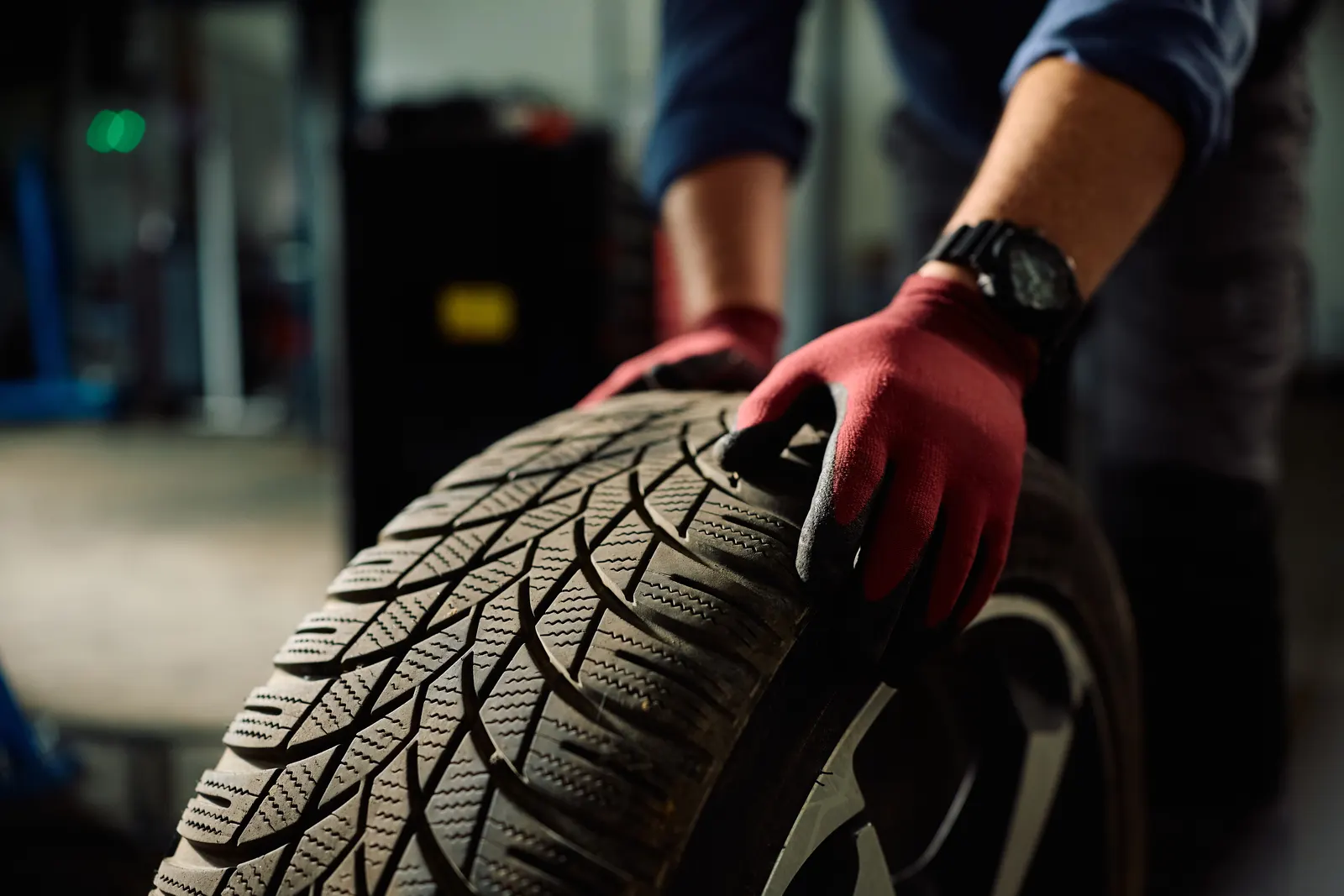
Pressure, once a month
The single most profitable habit in car maintenance. A tyre naturally loses around 0.1 bar a month; 0.5 bar underinflated, it wears fast on the shoulders, runs hot, lengthens braking and raises fuel consumption.
- Check cold, after less than 3 km of driving: pressure rises on the move.
- The values are on the driver's door sticker or inside the fuel flap.
- Loaded vehicle or long motorway runs: add 0.2 to 0.3 bar.
- Remember the spare wheel, worth checking twice a year.
Tread depth and the two-franc coin
The Swiss legal minimum is 1.6 mm, but wet grip collapses well before that. Our replacement thresholds: 3 mm for a summer tyre, 4 mm for a winter tyre.
The national test: slide a two-franc coin into the central groove. If the base below Helvetia stays fully visible, the tread is under 3 mm. Measure at the centre and both edges: a difference between the three points to a pressure or alignment problem.
Reading wear like a diagnosis
| What you see | What it means |
|---|---|
| Worn shoulders, intact centre | Chronic underinflation |
| Worn centre, intact shoulders | Overinflation |
| One side worn | Alignment to be checked |
| Sawtooth wear, droning noise | Shock absorbers or balancing |
| Cracked sidewalls | Ageing rubber: immediate check |
Direction of rotation, front vs rear: every tyre has its place
Many modern tyres cannot be fitted just any way round. Directional tyres carry a "Rotation" arrow on the sidewall: their V-shaped pattern clears water in one direction only. Fitted backwards, the tyre turns noisy and loses much of its aquaplaning resistance. Asymmetric tyres carry an "Outside / Inside" marking: the Outside face must stay visible, but there is no direction of rotation.
Front and rear do not live the same life: on most cars the front axle pulls, steers and takes most of the braking, so it wears much faster. Rotating front to rear every 10,000 to 15,000 km evens out wear and lets you replace all four tyres at once. Directional tyres are rotated on the same side, without crossing. And some sports and rear-wheel-drive cars use different sizes front and rear: there, rotation is simply not possible.
Punctures: repairable or not?
A screw in the tyre does not necessarily mean a tyre in the bin. A perforation of up to 6 mm, located in the tread, can be repaired durably from the inside (vulcanised mushroom patch), after dismounting and a full carcass inspection.
- Repairable: a perforation of up to 6 mm in the tread, with the tyre dismounted, inspected and repaired from the inside.
- Not repairable: damage to the sidewall or shoulder, a carcass marked by running flat, an aged tyre or one worn below 3 mm, multiple injuries.
- Temporary only: external string plugs and sealant sprays will get you to the workshop at reduced speed, no further.
Driven flat, even for a few hundred metres, a tyre may be beyond saving: stop as soon as you safely can. Tell us if a sealant spray has been used, and note that many runflat tyres cannot be repaired at all, by order of their manufacturers.
Age matters as much as mileage
Rubber ages even standing still: it hardens, cracks and loses grip. From 5 years on, have your tyres checked yearly; at 10 years, replace them whatever tread remains. The exact age is in the DOT code on the sidewall: our decoder turns it into a date.
Storing tyres without ruining them
- Wash and dry before storage, pick stones out of the grooves.
- On rims: stacked flat or hung up, at normal operating pressure.
- Without rims: upright, turned a quarter of a turn every month.
- Cool, dry, dark room, away from electric motors and solvents: ozone and hydrocarbons attack rubber.
- Mark each position on removal (FL, FR, RL, RR) so you can rotate on refitting.
No suitable cellar? Our seasonal storage takes care of everything: your tyres spend the off-season in good conditions and come back checked and ready to fit at your next visit.